It started with a missing sign.
A few days ago, Mark and I were up on Mt. Baldy, foraging for King Boletes — the king of mushrooms, worth every step of the climb. There's a spot I know. To get there you follow the cross-country ski trail and turn west at the junction. But the sign that marks that junction was gone. So we kept walking south, certain we were right, the way you always are right up until you aren't.
By the time the mountain told us the truth, the light was already going.
What we did right
I want to say this part plainly, because it matters and because we earned it: we did a lot right that day.
When I understood we were lost, we stopped. We did not go crashing downhill in the dark chasing a way out — that's how people get hurt, and hurt is how the cold gets you. We stayed put. I built us a shelter before nightfall. I foraged food while there was still light to see by. Everything I teach — read the land, use what's there, don't panic, work the problem — we did.
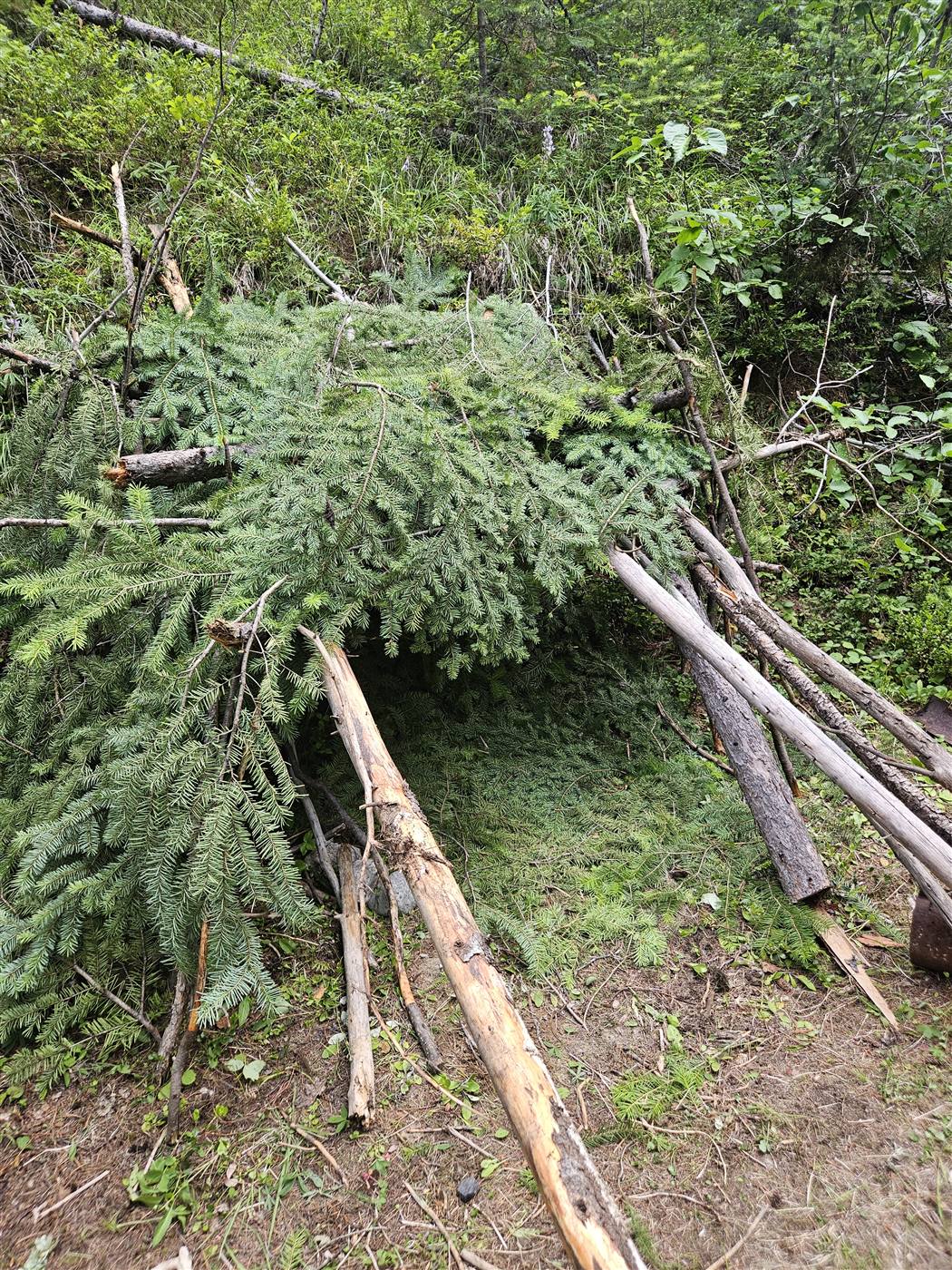
These are not small skills. They are the difference between a hard night and a last one.
What I did wrong
And here's the humbling part, the part I'd rather not print but will, because honesty is the whole point of this page:
I can forage a gourmet dinner on that mountain — and I forgot to bring water.
We went up dressed for an afternoon, not a night. No warm layer for the cold that rolls down a mountain after dark. No water, which meant that by the small hours I was severely dehydrated, and dehydration does strange, frightening things to your mind when you're already cold and afraid.
I had the advanced skills and skipped the basics. Master forager, unprepared hiker. The mountain does not grade on a curve, and it does not care how much you know about mushrooms. It cares whether you brought water. I hadn't.
Stay awake and stay ready, I'm always telling you. Turns out I needed the reminder too.
The night, and the machine that failed
A night on a mountain is long. Cold stretches an hour into a season. You wait, and you think, and the fear slowly burns down to something very simple. When everything is stripped away — no comfort, no signal, no version of you that's in charge anymore — you find out fast what's actually left. Not your bank balance. Not your inbox. Just the people you love, and whether you'll see them again. The mountain is a ruthless editor.
Here's the part that should chill anyone who trusts their phone to save them: the search took eight hours, and part of why is that a garbled GPS signal — bounced off a tower nearby — told Search and Rescue we were fifteen miles south of where we actually were. The clever machine sent them into the wrong valley.
The technology failed. The people didn't.
Who came
Two things happened in that cold and dark, and I will carry both of them for the rest of my life.
The first: Oliver and Osoyoos Search and Rescue came for us. Volunteers — neighbours who keep a pack by the door and drive their ATVs up a black mountain for people they've never met, and ask for nothing back. We heard them before we saw them: the low rumble of the machines, and then the headlights swinging up through the trees. If you have ever spent hours believing no one is coming, and then someone comes, you know it rearranges something in you permanently.
The second happened while we were still up there, and I only learned it after: my gang — my people — had gathered at the bottom and spent the entire night bent over maps of the mountain, working out where we might be, ready to walk in at first light if SAR hadn't reached us by then.
Nobody paid them. Nobody asked them. They just came, and they stayed, and they were ready.
That is the whole thing. That is what I have been trying to say in every post I've ever written here. You do not build community in the emergency. You build it in all the ordinary days before — the shared meals, the borrowed tools, the showing up — so that it already exists, fully formed, on the night you need someone to study a map by lamplight and mean it.
I have spent years preaching resilience. This week my community handed me the proof.
What the mountain taught me
- Skills keep you alive; basics keep you safe. Bring the water. Bring the layer. Do the boring things — they're the ones that carry you home.
- Don't trust the machine to save you. A tower's garbled signal sent help fifteen miles the wrong way. Paper maps and stubborn neighbours got it right.
- Community is not a nice-to-have. It's the infrastructure. When the lights go out — literally — the village is who comes over the ridge. Build it before the cold.
I'm not going to tie a bow on it and call it a gift. It was frightening, and I'd have rather learned it some easier way. But the mountain looked me dead in the eye and asked whether I meant all of it — the preparedness, the humility, the community. I did. I do. And we're still here to say so, because people we love came looking.
To Oliver and Osoyoos SAR, and to my gang who never went to bed: thank you. I owe you a debt I'll spend the rest of my life happily failing to repay.