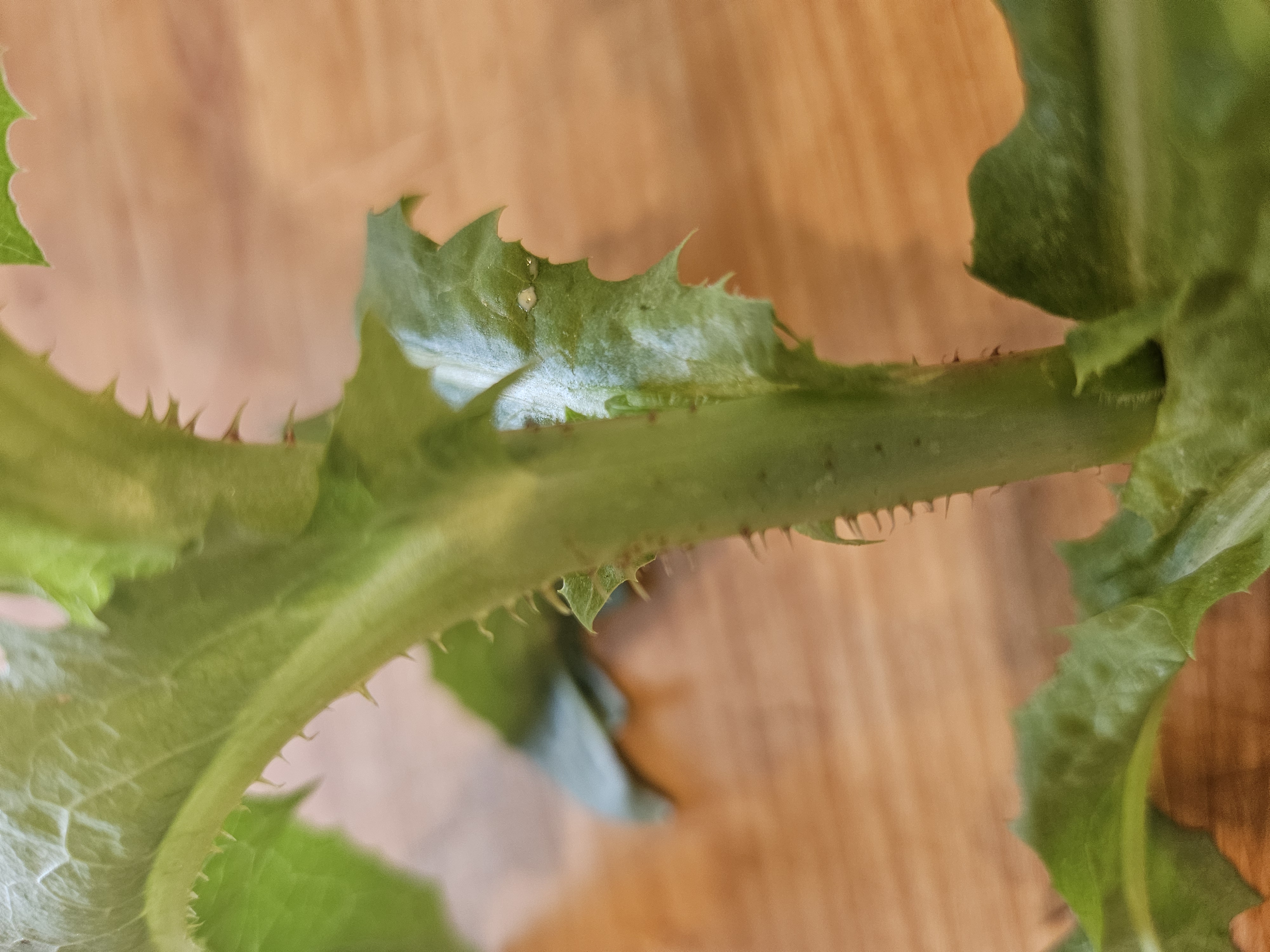
If you walked through my garden right now, your first instinct might be to apologize on my behalf. To the neighbours, maybe. Or to the garden itself. Plants everywhere. Different heights, different families, all apparently fighting for the same square foot of soil. Tall weeds towering over flowers half their size. Strawberries wedged into spots no sensible gardener would put strawberries. Alyssum spilling out where alyssum has no business being. And right in the middle of my peppers — calendula, blooming away like it owns the place.
It looks like chaos. I’ve watched people’s faces as they take it in, doing the polite Canadian math of how to compliment a garden that appears to have escaped its owner.
Here’s the thing, though. Every single one of those weeds was allowed to grow exactly where it is. On purpose. By me.
That towering weed crowding the flowers? Wild lettuce — one of the best pain relievers growing on this continent, and it planted itself for free. The plantain and dandelion that most people spend their weekends ripping out and poisoning? That’s my anti-inflammatory tea. The calendula in the peppers is working — pulling in pollinators, confusing pests, doing more for those peppers than any product in a spray bottle ever could. The strawberries and alyssum that look like they’re struggling for space are living groundcover, holding moisture in soil that would otherwise bake in the Okanagan sun.
There is a method to my madness. The garden isn’t out of control. It’s in conversation. But we’ve been trained not to see it that way.
Straight Lines and Other Lies
Somewhere along the way, we decided that order looks like straight lines. Rows of corn. Lawns mowed to regulation height. Hedges with corners. A garden is ‘well kept’ when it could pass a military inspection — and I say that as someone who has actually worked with the military, so I know exactly how much energy it takes to keep something looking like that.
Straight lines are easy to manage. Easy to measure. Easy to harvest with a machine. They were never about what’s good for the plants, or the soil, or frankly for us. They’re about what’s convenient for the system doing the extracting.
Nature doesn’t do straight lines. Nature does edges. In permaculture, the edge is where the action is. Where the forest meets the meadow, where the pond meets the bank — that’s where you find the most life, the most diversity, the most productivity. Two ecosystems overlapping create something richer than either one alone.
So permaculture design doesn’t minimize edges. It multiplies them. That’s why my garden is built in keyhole beds — curved, lobed, folded in on themselves. All those curves mean more edge. More edge means more niches. More niches means more relationships between plants, insects, soil, and water. What looks like chaos is actually a denser web of cooperation than any straight row could ever hold.
The tidy garden and the thriving garden, it turns out, are two different gardens.
The Mask of Balance
Which brings me to the part of this post that isn’t about gardening. Because we do the same thing with our lives that we do with our lawns. We keep things tidy. Calendar full, inbox managed, fridge stocked from a supply chain we’ve never once thought about, retirement plan humming along in markets we don’t understand. Everything in straight lines. Everything looking balanced.
And it is balanced — the way a stack of dishes is balanced. Right up until something bumps the table.
Meanwhile the actual world — the real one, outside our tidy systems — is doing what it has always done: changing, shifting, throwing curveballs. Supply chains snap. Prices spike. Weather does things it didn’t used to do. Institutions we assumed were load-bearing turn out to be decorative. The chaos isn’t coming. It’s here. It’s been here. We’ve just been mowing over it.
My garden looks chaotic and is deeply stable. If one crop fails, ten others are still going. If the pests find the peppers, the calendula is already running interference. If a heat dome parks itself over the valley, the groundcover is holding the moisture. Nothing in that garden depends on everything else going perfectly. That’s the design.
The tidy life is the opposite. It looks stable and is deeply fragile. It depends on every shipping lane staying open, every paycheque arriving, every system functioning exactly as advertised. One disruption and the straight lines fall like dominoes — which, come to think of it, is the only thing straight lines are truly good at.
Respect the Edges
So no, I’m not going to tidy up my garden for the fifth annual Pine Cone Ball Tournament next week. I’m going to keep letting the wild lettuce grow tall and the dandelions bloom and the alyssum wander wherever it pleases, because every one of those ‘weeds’ is part of a system that can take a punch.
And maybe that’s the invitation. Not to throw your life into actual chaos — please don’t quit your job and plant dandelions in your living room, that’s not where I’m going with this. But to ask yourself, honestly: is your life balanced, or is it just tidy? If something bumped the table tomorrow, what in your world would still be standing?
Then maybe let a few edges into your life. Grow one thing you can eat. Learn one plant growing wild in your neighbourhood. Build one relationship that doesn’t depend on a system staying upright. Mess up one straight line, on purpose, and see what moves in.
Because the goal was never to look balanced. It was to be ready.