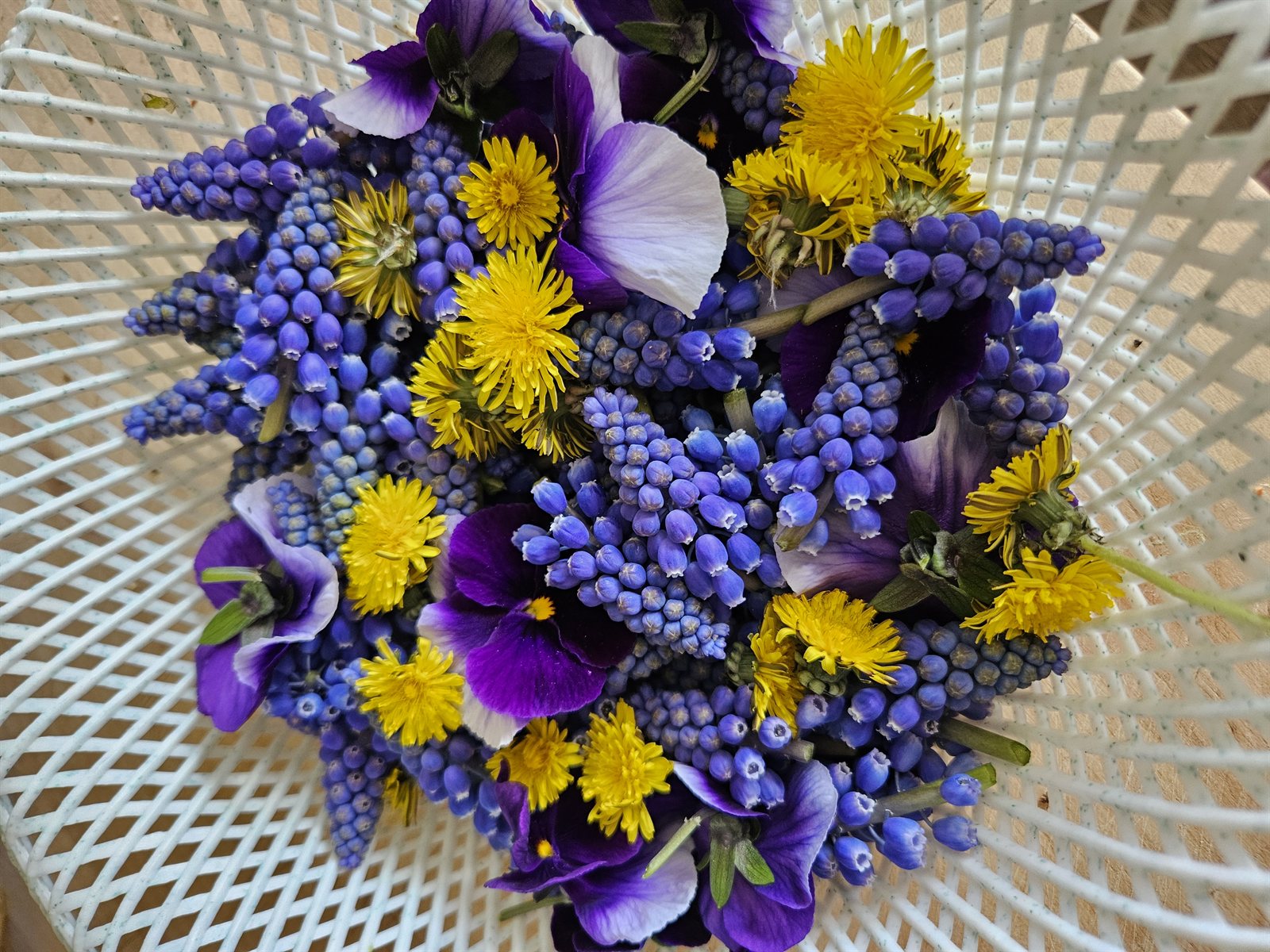
Nobody plants a weed. That’s the first thing to notice about them. Nobody kneels in the spring dirt, tucks a dandelion seed into the soil, waters it lovingly, and waits. And yet there they are — every May, without fail and without permission, shouldering up through the lawn, the gravel, and the crack in the driveway you keep meaning to fix. The green little rebels. Public enemy number one of the tidy suburban lawn.
Most people see a sea of yellow and reach for the spray. For years, so did I. But somewhere between my old place in Calgary and my new patch in Oliver, I stopped fighting the weeds long enough to actually look at them. What I found wasn’t a nuisance. It was a whole faculty of teachers, holding class in the cracks, waiting for anyone humble enough to enroll.
Here’s what they’ve taught me.
Lesson one: bloom where you’re planted — especially if nobody planted you.
A dandelion doesn’t wait for good conditions. It doesn’t need a raised bed, a soil test, or your approval. It finds a seam of dirt the width of a dime and it goes. There’s something almost holy about that stubbornness — the refusal to wait for perfect circumstances before living your one wild life. We spend so much energy waiting for the conditions to be right. The weeds never got that memo. They bloom in the ditch, in the rubble, in the forgotten corner, and they bloom gold.
Lesson two: the first to show up are the healers.
This one surprised me. Weeds aren’t random. They’re the earth’s first responders — the pioneer plants that rush in wherever the ground has been wounded, scraped bare, compacted, or abandoned. That dandelion’s long taproot is drilling down through hardpan you couldn’t break with a shovel, hauling minerals up toward the surface. Clover, that other so-called weed, is quietly pulling nitrogen out of thin air and feeding it back into the soil — fertilizing the ground for free while it feeds the bees. Weeds show up first, in the hardest places, and they get to work healing them. If that isn’t a lesson about who really matters in a crisis, I don’t know what is.
Lesson three: you cannot glare it into submission.
You can mow a dandelion. You can pull it, curse it, pave over it. It will be back — often stronger, often faster, sometimes out of what looks like pure spite. And honestly? Good for it. There’s a reason the old joke writes itself: you cut it down, and it turns around and offers you wine. (Yes, you can make wine from the flowers. Nature’s way of saying, “You mowed me? Ha. Now drink me.”) Resilience isn’t never getting knocked flat. Resilience is what grows back the week after. The weeds are very clear on this point.
Lesson four: the thing you cursed might be the thing that saves you.
Let me tell you how I really learned to respect a weed. I was out foraging one afternoon and — well, nature called. No bathroom in the woods, so I found a quiet spot, did my business, and thought nothing of it. Until the next day, when it became very, very clear that I had planted my bare behind directly in a patch of poison ivy. Nothing — and I mean nothing — motivates you to learn plant medicine faster than poison ivy in a location you cannot bring up at dinner parties. And the cure had been growing three feet away the whole time: plantain. Not the banana — the humble green rosette flattened into your lawn right now, the one you’ve stepped over ten thousand times. You chew up a leaf, make a poultice, and apply it with the solemn dignity of a battlefield medic. Three times a day, two days, healed. The pharmacy was underfoot the entire time. It usually is. We’re just too busy weeding it to notice.
Lesson five: no two are exactly alike.
Look closely at a lawn full of dandelions sometime — really look. Some are big and bold and perfectly round, little suns. Others are shaggy rebels with petals pointing every which way, like they got dressed in the dark. They’re like people that way. No two identical, each one a little messy, a little imperfect, entirely itself. We keep trying to sort the world — and each other — into the tidy rows and the weeds, the worthy and the unwanted. The dandelions find that hilarious.
So maybe the perfect lawn was never the point. Maybe a weed is just a plant whose gifts we haven’t bothered to learn yet. Maybe the good life — the resilient one, the alive one — looks a lot more like the messy lawn: buzzing with bees, dotted with dandelion suns, threaded with clover, first aid kit and salad bar and schoolhouse all at once.
I’m not going to tell you to love your weeds. I’m just going to suggest, gently, that before you reach for the spray this year, you kneel down and ask what they might be trying to teach you.
I did. Turns out they had a lot to say. And at least one of them saved my behind.